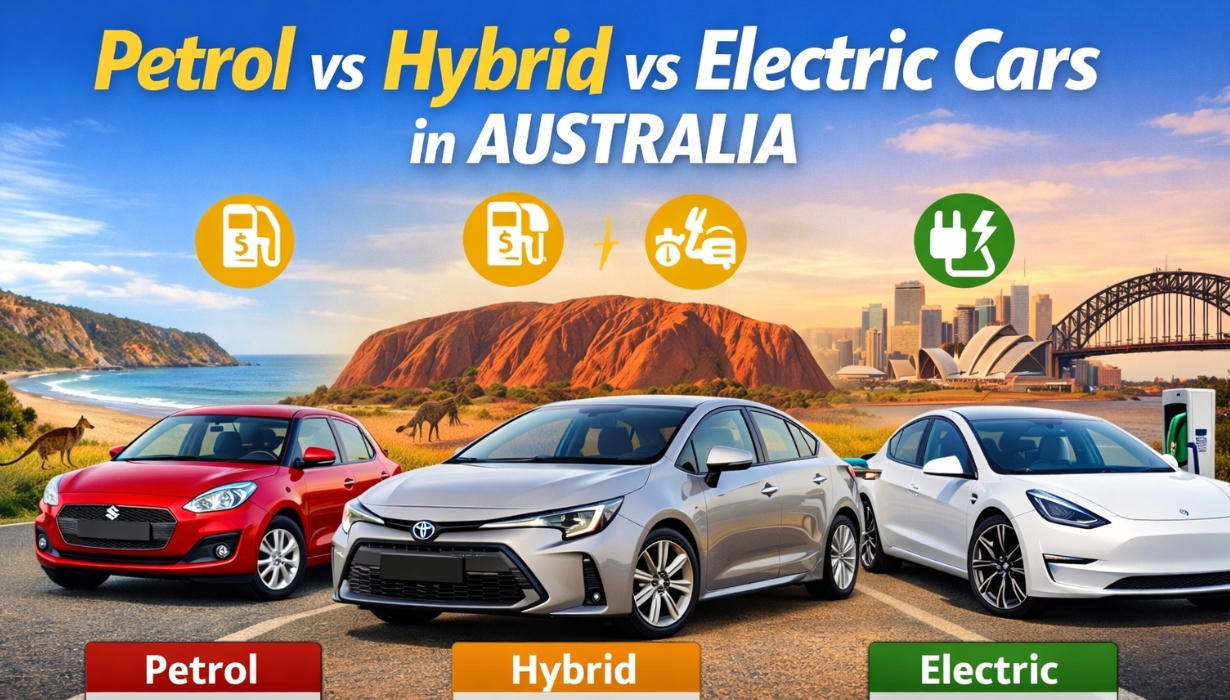
Choosing a car in Australia is no longer just about price, brand, or design running cost has become one of the biggest deciding factors.
With petrol prices fluctuating, hybrid demand rising, and electric vehicles becoming more common across Australian roads, many buyers now ask:
Which car type is actually cheapest to run in Australia Petrol, Hybrid, or Electric?
The answer isn’t just about fuel or electricity. Real ownership cost includes:
Fuel or charging cost
Servicing and maintenance
Depreciation
Driving habits
Charging access
Long-term ownership
In this guide, we’ll break everything down using realistic Australian driving data, practical examples, and long term cost comparisons to help you make the right decision.
Understanding Running Costs in Australia
Before comparing petrol, hybrid, and electric vehicles, it’s important to understand what “running cost” actually means.
In Australia, car running costs typically include:
Fuel or electricity
Servicing
Repairs
Tyres
Registration and insurance (similar across vehicle types)
The biggest difference between petrol, hybrid, and EV vehicles is energy cost and maintenance.
Let’s start with fuel and electricity costs.
Fuel Cost in Australia vs Electricity Cost
We’ll use a realistic Australian driving scenario:
Average driving distance: 15,000 km per year
Petrol price: $1.90 per litre
Electricity price: $0.30 per kWh
Typical efficiency:
Petrol car: 8L/100km
Hybrid car: 4.5L/100km
Electric car: 15kWh/100km
Cost Per 100km Comparison
This is the most important comparison for Australian buyers.
Electric cars cost less than one third of petrol cars to run per kilometre.
Hybrids cut fuel costs by roughly 40–50% compared to petrol vehicles.
Petrol Cars in Australia: Familiar and Affordable
Petrol vehicles still dominate the Australian market because they are affordable, reliable, and easy to refuel anywhere.
Popular petrol cars include:
Toyota Corolla
Mazda 3
Hyundai i30
Kia Cerato
These vehicles are widely available in used cars Australia listings, making them the easiest entry point for buyers.
Why Petrol Cars Are Still Popular
Petrol cars remain common because:
Lower purchase price
Large used-car availability
Simple servicing
No charging concerns
Reliable long-distance travel
For buyers browsing classified platforms like AussieMotor, petrol cars often represent the best short term financial choice.
Petrol Running Costs Over Time
The downside of petrol cars is fuel dependency.
Fuel prices in Australia can change quickly, and high-consumption vehicles become expensive to run.
Example:
15,000 km per year
8L/100km consumption
$1.90 fuel price
Annual fuel cost: $2,280
Five year fuel cost: $11,400
That’s often more than the value of some used cars.
Hybrid Cars in Australia: The Practical Middle Ground
Hybrid vehicles are becoming extremely popular in Australia because they combine:
Petrol engine reliability
Electric efficiency
No charging requirement
They are especially efficient in city driving conditions like Melbourne and Sydney traffic, where stop start driving improves hybrid performance.
Popular hybrid cars in Australia include:
Toyota Corolla Hybrid
Toyota Camry Hybrid
Toyota RAV4 Hybrid
How Hybrid Technology Reduces Fuel Cost
Hybrid cars use:
Electric motor at low speeds
Petrol engine when needed
Regenerative braking to charge the battery
This dramatically reduces fuel consumption.
Typical hybrid fuel economy in Australia: 4–5L per 100km
That’s nearly half the fuel consumption of a petrol car.
Hybrid Fuel Savings Example
Petrol car fuel cost: $2,280 per year
Hybrid fuel cost: $1,282 per year
Savings: $1,000 per year
Over five years: $5,000
This is why many Australian buyers see hybrids as the best balance between cost and convenience.
Hybrid Maintenance in Australia
Hybrid vehicles typically cost less to maintain than petrol cars because:
Less engine strain
Regenerative braking reduces brake wear
Toyota hybrid systems have strong reliability history
Hybrid servicing cost is usually 10–20% lower than petrol vehicles over time.
Electric Cars (EVs) in Australia: Lowest Running Cost
Electric vehicles have the lowest operating cost of any vehicle type.
There’s no petrol engine, no oil changes, and far fewer moving parts.
Popular EVs in Australia include:
Tesla Model 3
BYD Atto 3
MG4 Electric
Hyundai Kona Electric
Electricity Cost for EVs in Australia
Typical EV energy consumption: 15 kWh per 100km
Electricity price: $0.30 per kWh
Cost per 100km: $4.50
This is dramatically cheaper than petrol.
Home Charging vs Public Charging
Home charging is the biggest advantage of EV ownership. Charging overnight using off peak electricity can reduce EV running cost even further. Public fast chargers are more expensive but still usually cheaper than petrol.
Australia’s charging infrastructure is expanding quickly, especially in:
Major cities
Highways
Shopping centres
EV Maintenance Costs in Australia
Electric cars require less servicing because they don’t have:
Engine oil
Spark plugs
Exhaust systems
Transmission systems
Maintenance costs are often 30–50% lower than petrol cars. Brake systems also last longer due to regenerative braking.
5-Year Running Cost Comparison in Australia
Let’s compare total running cost over five years.
This clearly shows the long-term advantage of EV ownership.
Upfront Cost vs Running Cost
The main reason petrol cars still dominate is purchase price.
Typical price comparison in Australia:
This creates a trade-off:
Petrol = cheaper upfront
EV = cheaper long term
Hybrids sit in the middle.
Driving Habits Matter More Than Car Type
Running cost depends heavily on how Australians actually use their cars.
EVs save the most money when:
Driving daily
Charging at home
Keeping the car long term
Hybrids are ideal for:
City commuters
Ride-share drivers
Families
Petrol cars still make sense for:
Low-distance drivers
Rural areas
Budget buyers
Australia’s EV Adoption Is Growing Fast
Electric vehicles are becoming more common in Australia due to:
Fuel cost concerns
Government incentives
Better charging networks
More affordable EV models
But hybrids continue to grow even faster because they require no lifestyle changes.
Which Car Type Is Cheapest to Run in Australia?
Here’s the simple answer:
Electric cars are cheapest to run
Hybrid cars are second cheapest
Petrol cars are the most expensive to run
However, the best choice depends on your situation.
Buyer Advice for Australians
Choose petrol if:
You want the lowest purchase price
You drive occasionally
You’re buying used
Choose hybrid if:
You drive daily
You want fuel savings without charging
You want strong resale value
Choose electric if:
You can charge at home
You drive frequently
You plan long term ownership
More Related Articles
2026 Toyota New Cars Price in Australia
Conclusion
The Australian car market is changing quickly, and running cost is now one of the most important factors for buyers.
Petrol cars remain affordable and practical.
Hybrid cars offer strong fuel savings without charging.
Electric vehicles deliver the lowest running cost overall.
For most Australians today, hybrids provide the best balance but EVs are clearly the future of low cost driving in Australia.
Choosing the right vehicle depends on your budget, driving habits, and long-term plans.
